Fresh eyes on your packaging: why a review pays back when costs are rising
Most packaging specs were right on the day they were set.
Since then the product has changed, the line has changed and the volumes have changed. The box, the film and the pallet pattern are often still the ones someone chose years ago.
Nobody did anything wrong. Packaging that works doesn’t get questioned. It leaves the building, it arrives intact, and the team has bigger problems to solve.
That is exactly why it is worth having someone from outside take a look.
Why you can’t see it yourself
Three things get in the way, and none of them is a lack of skill.
Familiarity. People who pack a product every day stop seeing the steps. The void fill that crept in, the extra wrap added after one complaint, the carton that is 40 mm bigger than the product because the old product needed it: all of it becomes normal.
Split ownership. The buyer sees price per unit. Operations sees how fast the line packs. The warehouse sees space and stock. Each has one piece of the picture, and few have the time to put the pieces together.
Risk. Changing a pack that works feels like all downside. So it stays as it is.
Why now
Price per unit is moving the wrong way, and that is the part you can’t control.
- SCA announced a €100 a tonne rise in kraftliner prices across Europe from 1 September (SCA, 6 August 2026).
- Plastic PRN prices reached a record £650 a tonne in September, and the 2026 average is above £370 a tonne, against about £180 in 2025 (letsrecycle.com, 9 September 2026; Packaging Gateway, 3 September 2026).
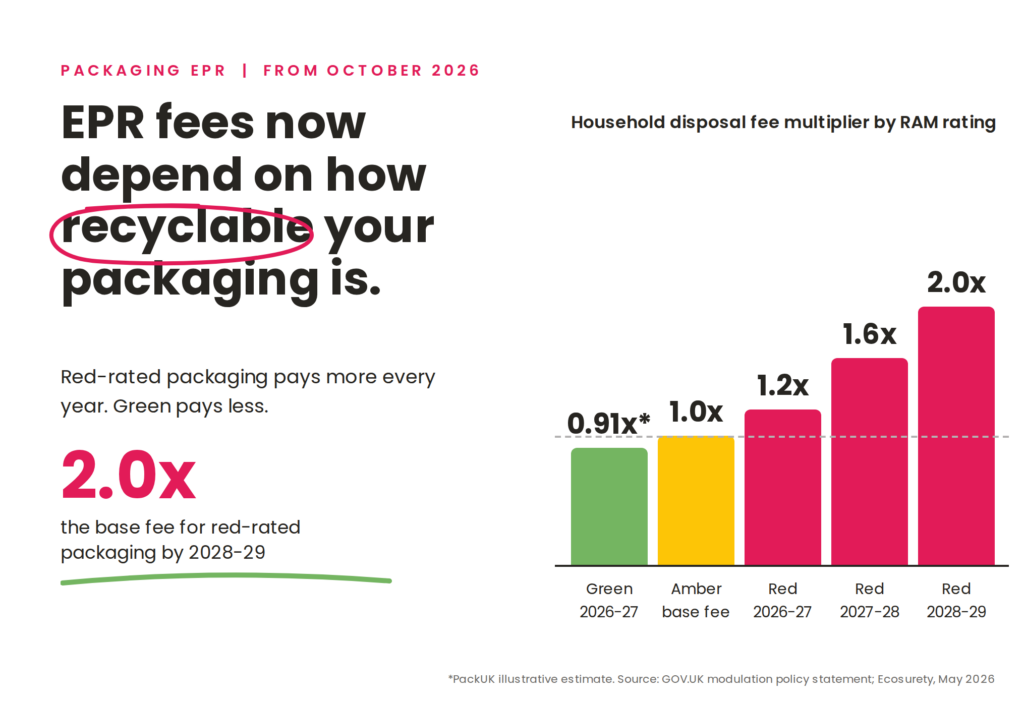
- EPR modulated fees are being invoiced from October. We set out what component manufacturers should check in a recent post.
- The September UK manufacturing PMI shows supplier delivery times lengthening and transport costs rising on higher diesel (S&P Global/CIPS via Trading Economics, 1 October 2026).
Whether any of this reaches your invoice depends on grade, volume and supplier terms. Some of it won’t. But enough is moving to make this a good time to look.
A rise on a tonne of board matters less if you use less board per unit you ship. How much packaging you use, how long it takes to pack and how much space it takes up are the parts you can control.
What a packaging review looks at
A good review covers five areas.
Specification. Is the board grade, film gauge or insert doing more than the product needs? Specs are often set for a worst case that no longer applies. Where it matters, crush and transit testing shows what the pack really needs.
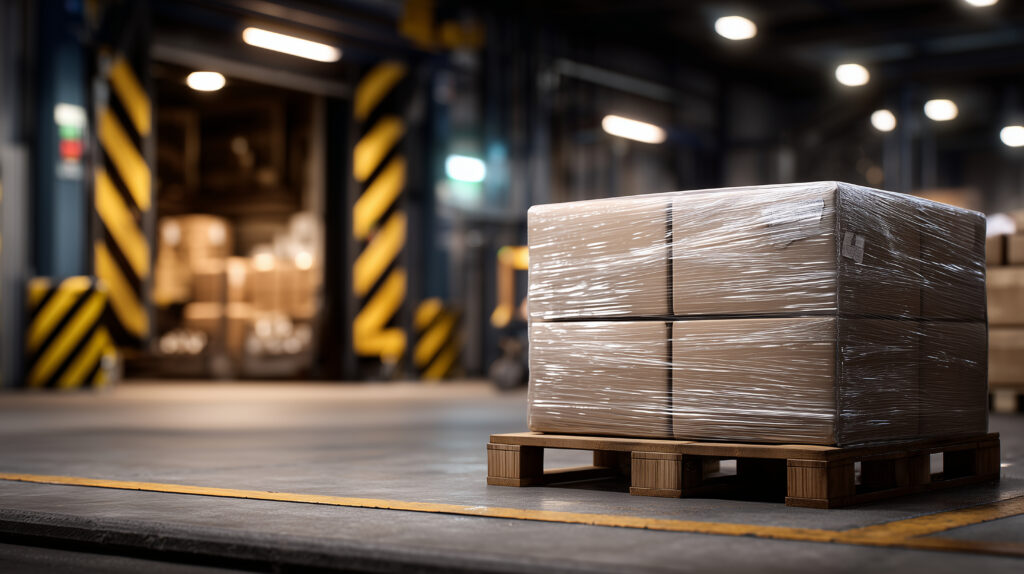
Size and space. How much of each pallet is air? Smaller, better-fitted packs mean fewer pallets to store and ship.
Pack-out. How many steps, how many hands and how many seconds from empty carton to taped, labelled box? A few seconds saved per pack is quiet work, but it adds up across a year’s volume.
Supply. How many weeks of cover do you hold on each item? Which items come from a single source? How much effort does ordering take? A packing line that stops for want of cartons costs more than the cartons. Stocking agreements and dual sourcing exist for this reason.
Plastics and compliance. What plastic packaging do you put on the market, and what do you report on it? Film gauge and board alternatives can change that. If you export into the EU, PPWR has applied since 12 August 2026, so it is worth knowing who holds the paperwork for each pack.
A short example
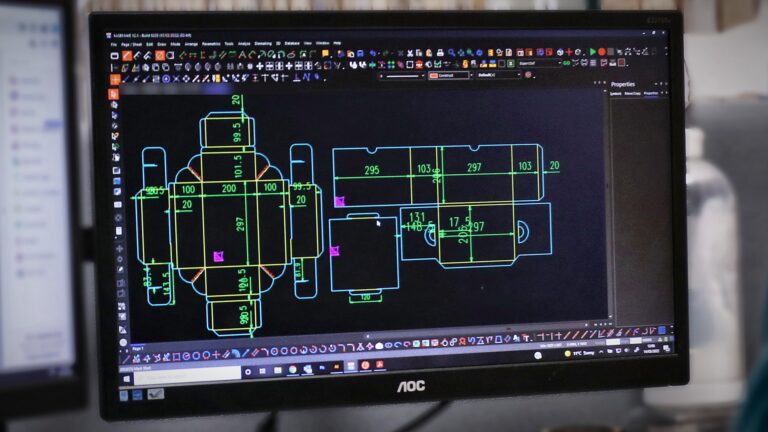
An electronics manufacturer was shipping its devices in boxes that took up more room than they needed to. We designed a smaller, stronger box in recycled, FSC-certified board, with the paper strength increased so the pack still protected the product. We built it around how the warehouse team actually packs it.
The result was 54% more boxes per pallet and 22.67% less cardboard. Fewer pallets to store, fewer to ship, and less board in every box.
The same kind of check can show film gauge or inserts that are more than the product needs.
A ten-minute first pass you can do yourself
Put the buyer, the operations lead and someone from the warehouse in a room. Take your five highest-volume packs and go through this:
- When was each spec last reviewed, and by whom?
- Look at the packed product on the bench. How much of the box is empty?
- Time a pack-out from empty carton to taped box. Count the steps.
- Check the weeks of cover on each item, and which items have one source.
- List which of your packaging is plastic, and what you report on it.
Any answer that comes back as “not sure” or “nobody has looked” is where a review earns its keep.
What a review with us involves
We look at what you pack, how it is packed, where it is stored and how it is ordered. You get a short list of findings, with what each is likely to save in time, space or material, and you decide what to take forward.
Sometimes the finding is that the spec is right. That is a useful answer too.
To book a packaging review, call us on 0800 840 9570 or email [email protected].