Packaging prices are rising. Here’s what’s still in your control
If you buy packaging for a manufacturing business, you’ve probably already had a letter or two this autumn warning of price rises. You can’t control what happens to board, film or compliance costs. But the price per box or per roll is only part of what packaging costs you, and the rest is in your hands. Here are seven places to look before the next price letter lands.
What is pushing prices up
Paper prices have gone up in Europe, and board suppliers are warning that UK sheet and box prices could follow. SCA put kraftliner prices up by €100 a tonne from September, and UK corrugated capacity is lower this year after a Birmingham paper mill closed in July.
Film is moving the same way, with polythene raw material costs rising alongside fuel prices. On top of that, plastic PRN prices hit a record £650 a tonne in September.
None of that is within your control. How much material you use, how you order it, how it fills a pallet and how long it takes to pack all are.
1. Right-size your boxes
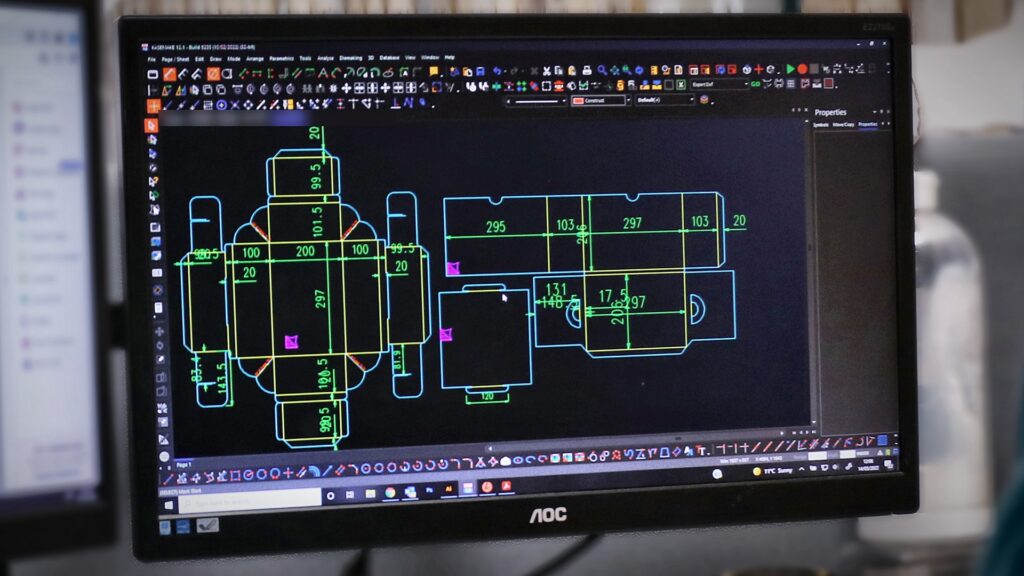
Most packaging ranges grow one job at a time. A box that was right for a product five years ago is still in use after the product has changed, and the gap is filled with void fill.
An oversized box costs you three times. You pay for board you don’t need, for void fill to take up the space, and for freight on air. Measure your top ten products by volume against the internal size of the box they ship in. If there’s more than a couple of centimetres of space on each side, it’s worth a redesign.
2. Check the board grade against the real job
Board grades are often picked once and never looked at again. Double wall gets specified “to be safe” for products that travel on a pallet and never see a parcel network. Or a heavy liner is used where a lighter one would pass the same stacking test.
When board prices go up, every gram counts. Ask what the box actually has to do. How much weight does it carry? How high is it stacked, and for how long? Does it go by pallet or by courier? A transit test will tell you whether a lighter grade does the job. If it does, you save on every box from then on.
3. Look at your film gauge
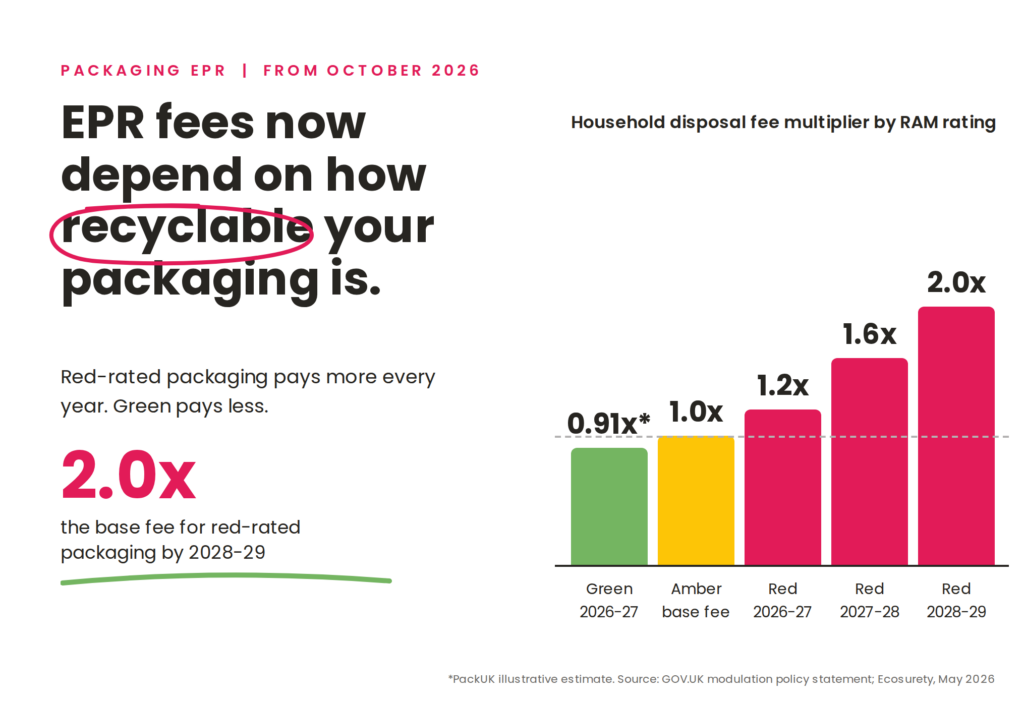
Stretch and shrink film is where cost and compliance now overlap. Plastic PRN costs have more than doubled in a year, and Plastic Packaging Tax applies to film with less than 30% recycled content. Both scale with the tonnage of plastic you put on the market. Heavier packaging also pushes up your EPR fees.
Many sites run a heavier film than the load needs, often because that’s what was always ordered. High-performance and pre-stretch films hold a load with less material. On a machine wrapper, power pre-stretch film goes further again.
We moved a medical device manufacturer off an overspecified 23 micron film. They now use less plastic with the same load containment, and their annual film cost has dropped dramatically.
The right comparison is cost per pallet, not cost per roll. A cheaper roll that needs more wraps isn’t cheaper.
4. Cut the number of box sizes
Most sites carry more box sizes than their products need. Each one is ordered in smaller quantities, which means a higher unit price, more set-up costs at the box maker and more space tied up in the warehouse.
Group your products by size and see how many could share a box, with a fitted insert where needed. Fewer sizes means bigger runs, better prices and a simpler stores. It also makes forecasting easier, which helps with the next point.
5. Order against a forecast, not an emergency
The most expensive packaging is the packaging you need tomorrow. Urgent orders mean small runs, premium delivery and sometimes a stopgap product that doesn’t quite fit.
Share a rolling forecast with your supplier, even a rough one. It lets them book production and material ahead of price rises and busy periods, rather than chasing it. This matters most in Q4, when lead times stretch every year with the Christmas rush. Planned, regular orders also give you a stronger position when prices are reviewed.
6. Get more on every pallet
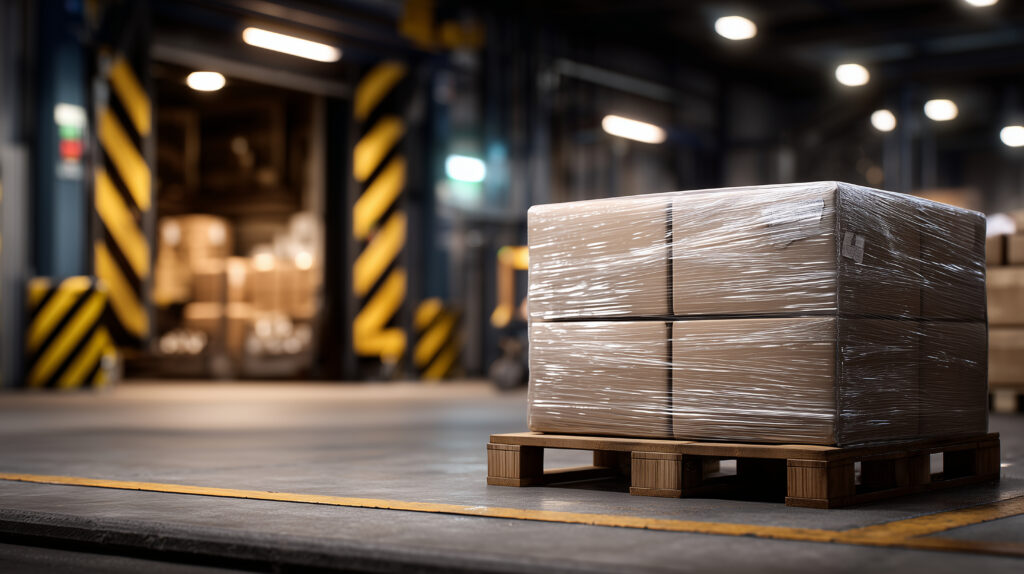
Freight is charged by the pallet, not by what’s on it. If your outer cases don’t fit the pallet footprint well, you’re paying to move gaps.
Check how your case sizes tile onto a standard UK pallet, and how high they stack before the load becomes unstable. Small changes to case dimensions can add a layer or fill an empty corner. The same goes for your packaging deliveries. A few full deliveries cost less in carriage than lots of part loads.
7. Count the minutes, not just the materials
The labour to pack a product can cost more than the packaging itself. A box that needs taping, folding and three pieces of loose void fill takes longer than one with a crash-lock base and a fitted insert.
Time a few pack-outs on your busiest lines. If one takes noticeably longer than it should, look at whether a different box style, a die-cut insert or a pre-formed tray would speed it up. Savings on packing time repeat on every unit, and they don’t depend on what board prices do next.
Where to start
You don’t need to do all seven at once. Pick your ten highest-volume packaging lines and ask three questions of each:
- Size and weight: is it bigger or heavier than the job needs?
- Range: could it share a size with something else?
- Pack time: how long does it take to pack?
The answers usually point to two or three changes worth making. Each one saves money on every order, whatever happens to material prices this winter.
How can Actionpoint help?
We can go through your current packaging line by line, flag oversized boxes, heavier-than-needed board and film, and slow pack-outs, and suggest alternatives that still protect the product. With access to up to 45 manufacturing lines, we can sample the options quickly and transit test anything we change. Where a change won’t save you money, we will tell you.
Get in touch
Material prices will do what they do. The spec, the order pattern and the pack-out are yours to change. Contact us today or call 0800 840 9570 for a second pair of eyes on your packaging costs.